


If you are teaching English to young learners for the first time, the first thing to accept is this: a five-year-old and a fifteen-year-old are not the same student wearing a smaller uniform. Teaching English to young learners calls for a completely different toolkit of routines, games, and classroom management than teaching teens or adults, and the teachers who figure this out early are the ones who end up loving their placements instead of surviving them.
This guide pulls together what actually works in real primary and kindergarten classrooms abroad: how to plan a lesson a five-year-old can follow, how to hold attention without shouting, and how to build the kind of classroom routines that stop chaos before it starts. We will also look at what child development research says about attention spans and learning stages, so your lesson plans are working with your students' brains rather than against them.
Why Teaching English to Young Learners Is Its Own Skill
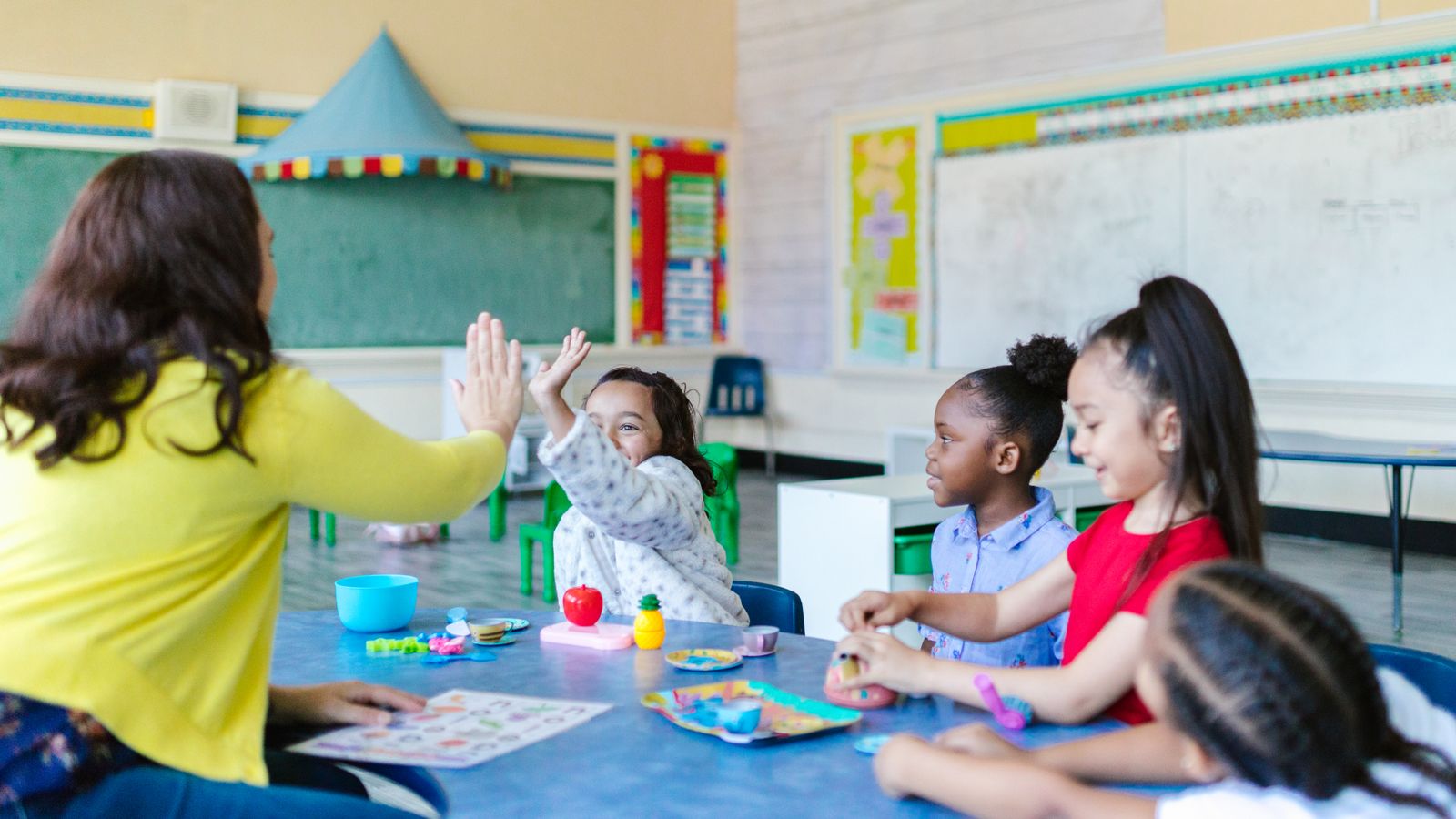
New teachers often assume that a simplified adult lesson will work fine for children. It will not. Young learners, roughly ages 4 to 11, learn primarily through play, repetition, movement, and sensory input, not through explanation. According to the CDC's developmental milestones guidance, children's attention, language, and self-regulation abilities develop in fairly predictable stages through early and middle childhood, which is exactly why a six-year-old cannot sit through a 40-minute grammar explanation the way a 16-year-old might (CDC Developmental Milestones).
That means your lesson plan is not just "the adult lesson, but easier." It needs shorter segments, built-in movement breaks, visual and physical cues, and constant low-stakes repetition. Teachers who treat a young learners classroom like a mini university seminar burn out fast, because they are fighting biology, not bad behavior.
For general classroom management fundamentals that apply across age groups, see our 10 classroom management tips for new TEFL teachers.
Classroom Management: The Real Starting Point
Ask any experienced young learners teacher what they wish they had known on day one, and most will say the same thing: classroom management comes before content. You can have the most beautifully designed phonics lesson in the world, but if twenty six-year-olds are out of their seats and nobody knows what happens next, none of it lands.
A few classroom management habits make an outsized difference:
- Consistent routines. The same greeting song, the same "quiet signal" (a raised hand, a clap pattern, a countdown), and the same tidy-up routine every single lesson. Predictability is calming for young children and cuts down on transition chaos.
- Clear, simple instructions. One instruction at a time, demonstrated physically, not just spoken. "Stand up. Now sit down" works better than a paragraph of spoken directions.
- Positive framing over negative framing. "Walking feet" lands better than "no running." Children respond to being told what to do, not just what to stop doing.
- Built-in movement. Total Physical Response activities, action songs, and quick stretch breaks are not a distraction from the lesson, they are part of what makes the lesson work for this age group.
The British Council's TeachingEnglish resource hub, which supports English teachers worldwide with classroom-tested materials, has a specific video segment on establishing routines in a first class with very young learners, including how to introduce phonics without losing control of the room (TeachingEnglish: First Class with Very Young Learners). It is worth watching before your first placement, because it shows real routines in action rather than describing them in the abstract.
Lesson Planning for Different Young Learner Age Bands
"Young learners" spans a wide developmental range, and a lesson plan that works for a kindergarten class will flop with 10 and 11-year-olds, and vice versa.
Ages 4 to 6: Play Is the Curriculum
At this age, English lessons should look almost entirely like play: songs, finger puppets, simple flashcard games, coloring tied to vocabulary, and lots of repetition of the same 8 to 10 words across a lesson. Attention spans are short, often 5 to 10 minutes per activity, so plan for five or six mini-activities rather than one long one.
Ages 7 to 9: Structure with Fun Attached
Children in this band can handle a bit more structure: simple worksheets, basic reading and writing tasks, and short group games with rules. They still need movement breaks and visual support, but you can start layering in light grammar concepts through stories and chants rather than direct explanation.
Ages 10 to 12: Bridging to Teen Methods
Older primary learners can start handling pair work, simple debates, project-based tasks, and more explicit grammar points, especially if you frame tasks as challenges or competitions. This age group is often the bridge between "young learners" methodology and the more familiar teen and adult TEFL toolkit.
Teaching Young Learners Online vs. In a Physical Classroom
Online teaching adds its own layer of difficulty to teaching English to young learners, because you lose the ability to physically redirect a child's attention or use the whole room for movement games. Premier TEFL alumna Vanessa, who has spent two years teaching children ages 3 to 17 online in China, breaks down exactly how she keeps young students engaged through a screen, including pacing, prop use, and how she reads engagement cues remotely.
Teaching English to Young Learners: A Practical Guide
Her approach reinforces a theme that comes up again and again in young learners teaching: energy and pacing matter as much as content. A slower, flatter delivery loses children fast, whether you are in a classroom in Vietnam or on a video call with a student in Shanghai.
Comparing Approaches by Age Band
| Age band | Typical attention span | Best activity types | Classroom management focus |
|---|---|---|---|
| 4 to 6 years | 5 to 10 minutes | Songs, puppets, flashcards, coloring | Routines, physical cues, constant praise |
| 7 to 9 years | 10 to 15 minutes | Simple worksheets, group games, chants | Clear rules, movement breaks, visuals |
| 10 to 12 years | 15 to 20 minutes | Pair work, light debates, mini-projects | Structured freedom, competition framing |
Behavior Challenges: What Actually Works

Every young learners classroom has its moments. A few practical, tested responses:
- Redirect, don't just correct. Instead of "stop talking," give the child something to do: "Can you help me hold this card?"
- Use a visible reward system. Simple sticker charts or point systems tap directly into how young children respond to immediate, visible feedback.
- Keep your own energy calm but warm. Children mirror adult energy. A frazzled teacher tends to produce a frazzled room.
- Have a "reset" activity ready. A short song or breathing exercise you can drop in anytime the room gets too wound up is worth more than any lecture on behavior.
Interactive elements and real classroom examples, rather than theory alone, are consistently what new teachers say helped the material click. As one Premier TEFL learner put it in a verified review: "The platform was user-friendly, and the modules were easy to follow, with clear explanations and useful resources. I especially appreciated the real-world examples and interactive elements that made the learning process enjoyable and effective." (Victoria Birch, ★★★★★, verified review)
Building a Simple Young Learners Lesson Plan
A reliable template for a 30 to 40 minute young learners lesson:
- Warm-up (3 to 5 minutes): Greeting song or chant, the same one every lesson.
- Review (5 minutes): Quick flashcard recap of previous vocabulary, kept fast and game-like.
- New content (8 to 10 minutes): Introduce new vocabulary or a phonics point through a story, song, or visual demonstration, not a lecture.
- Practice (10 minutes): A game, worksheet, or physical activity that uses the new language actively.
- Movement break (2 to 3 minutes): A stretch, action song, or quick game to reset energy.
- Wrap-up (3 to 5 minutes): Recap what was learned and end with the same closing routine every time.
Notice how short each block is. That is intentional and matches what child development research says about attention and engagement at this age; frequent transitions between short, varied activities hold interest far better than one long block of instruction.
Raising Hands, Turn-Taking, and Group Games
Teaching turn-taking and hand-raising is not a side lesson, it is part of what makes teaching English to young learners possible at scale. Simple games such as "pass the ball to answer," musical chairs vocabulary rounds, or team relay races that require using target language all build both English skills and classroom cooperation at once. The goal is to make good behavior part of the game rather than a separate set of rules imposed on top of it.
Free teacher tool
Quick skills check: how AI-ready is your teaching?
Schools and employers now shortlist teachers for AI skills. The free AI-Skilled Teacher check takes about 6 minutes: 12 quick questions, an instant result and a certificate you can add to your resume.
Try the free checkCommon Mistakes New Young Learners Teachers Make
- Talking too much. Long teacher-talk time loses young children almost immediately. Show, don't just tell.
- Ignoring energy levels. A class after lunch or right before home time needs a different pace than a fresh morning group.
- Skipping routines "just this once." Consistency is what makes a young learners classroom feel safe and predictable; breaking routine, even for a fun reason, can unsettle the whole group.
- Overplanning content, underplanning transitions. Most classroom management problems happen in the gaps between activities, not during them. Plan your transitions as carefully as your activities.
None of this requires years of experience to get right. It requires a shift in mindset: young learners are not small adults, and the classroom techniques that work with them are their own discipline within TEFL, one that becomes genuinely enjoyable once the routines click into place.
Simple Props and Materials That Punch Above Their Weight
You do not need an expensive resource cupboard to teach English to young learners well. A handful of low-cost, reusable materials cover most of what a young learners classroom actually needs:
- Flashcards. Cheap, durable, and endlessly reusable across games like memory match, "slap the card," and guessing games.
- A puppet or soft toy. Children will often speak more freely to a puppet than directly to the teacher, especially in the first few weeks of a placement.
- A simple reward chart. Stickers or stamps give children an immediate, visible sense of progress, which matters far more to a six-year-old than an end-of-term grade ever will.
- A small set of classroom instruction cards. Visual cards for "sit down," "listen," "quiet," and "line up" reduce your reliance on repeated verbal instructions, which is especially useful in the first weeks in a new country when your own language use may still be adapting to the local context.
- A bag of everyday objects. Real objects tied to vocabulary (a toy car, a piece of fruit, a small ball) make new words concrete in a way that pictures alone cannot always manage.
None of these need to be bought new or shipped from home. Most placements abroad give you access to a shared resource room, and local markets are often full of cheap, useful props once you know what to look for.
Working with Parents and Guardians

In many young learners placements, especially private language schools and international kindergartens, parents are far more present and involved than they would be at secondary level. A short, friendly update after class, even just a sentence or two about what was covered, tends to build trust quickly, particularly in countries where parents are paying directly for English lessons and want visible signs of progress.
New teachers sometimes find this parental involvement intense at first, especially in cultures where parents may wait outside the classroom or request detailed feedback. It helps to set expectations early: agree with your school on how and when feedback will be shared, so you are not fielding ad hoc requests mid-lesson. A little structure here protects your teaching time and keeps the relationship positive on both sides.
Transitioning Between Activities Without Losing the Room
If classroom management has one true weak point for new young learners teachers, it is the transition, not the activity itself. A class can be calm and focused during a game, then fall apart completely in the thirty seconds it takes to move from the carpet to the tables. A few transition habits worth building from day one:
- Give a countdown warning. "Two more minutes" said clearly, ideally paired with a visual timer, prepares children mentally for the switch.
- Use a consistent transition signal. The same short song, clap pattern, or phrase every time a transition happens reduces confusion and resistance.
- Give the next instruction before the current activity fully ends. Children need to know what is coming, not just that the current thing is stopping.
- Build in a physical movement during transitions themselves. A short "walk like a robot to your seat" instruction turns a potential chaos point into part of the fun.
Teachers who master transitions often find their overall classroom management problems shrink dramatically, simply because the moments where a class typically falls apart have been planned for in advance rather than left to chance.
Adapting When Class Sizes Are Large
Many TEFL placements abroad, particularly in Asia and parts of Latin America, involve larger classes than teachers may be used to from their home country, sometimes 25 to 35 young children with a single teacher. Large classes call for a few adjustments to standard young learners methodology:
- Favor whole-class and pair activities over small groups, which are harder to monitor at scale without a teaching assistant.
- Use choral repetition heavily. Everyone answering together, rather than one child at a time, keeps engagement high and reduces dead time.
- Lean on visual and physical routines even more than usual, since verbal instructions are harder for every child to hear and process in a large room.
- Recruit classroom helpers. Assigning simple jobs, handing out worksheets, leading the line, collecting flashcards, gives children a sense of ownership and frees you up to manage the wider room.
Many schools pair foreign English teachers with a local teaching assistant for exactly this reason. If you are placed in a large class without support, it is worth raising with your school directly. It is a completely normal and reasonable request.
Google Reviews
Curious what training with us is really like? See our Google reviews
 Read our Google reviews


